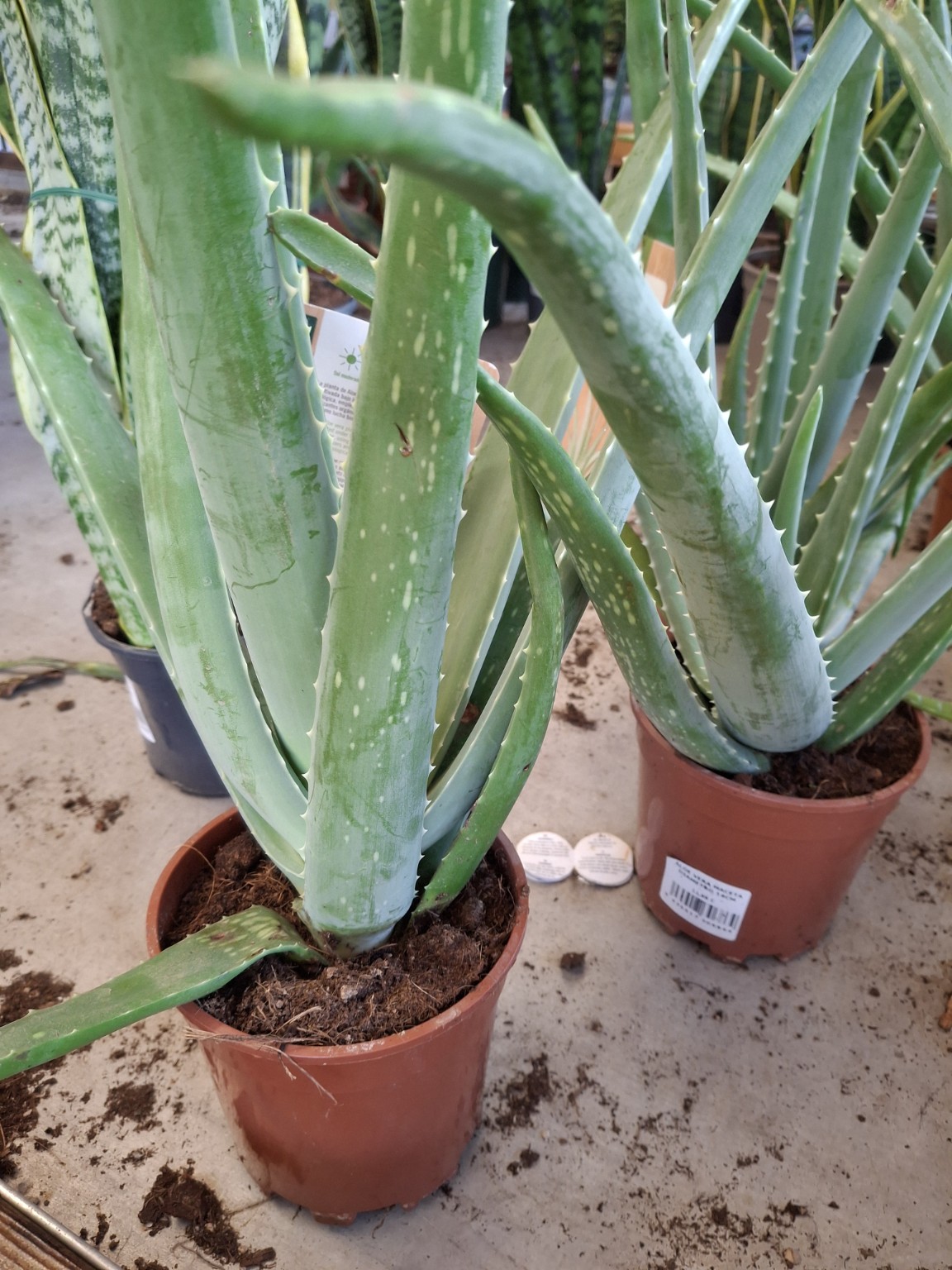
Give it light, then time to adjust
Aloe vera stores water in thick leaves arranged around a short central stem. Indoors, give it a bright position close to a window, with some direct sun once it has adjusted. A dim shelf is unlikely to support compact growth.
A plant brought home from a shaded shop can scorch if put straight into strong sun. Increase exposure gradually, especially before moving it outdoors. Watch the leaves facing the window after each change. Pale, dry patches and soft, collapsing leaves need different checks.
When to water an aloe
Let the potting mix dry between waterings. Check below the surface and lift the pot: a dry crust can hide a damp root ball. When the mix is dry, water thoroughly around the plant until water drains out, then empty the saucer or outer pot.
There is no useful weekly rule. A warm, bright room and a small clay pot dry differently from a cool room and a large plastic container. Recheck moisture when growth slows; do not give a winter plant its summer routine automatically.
Soil, drainage and repotting
Use a free-draining succulent mix and a pot with drainage holes. Choose a container that fits the roots with a little room to grow. An oversized pot holds more wet mix than a small root system can use.
Repot when the roots fill the container, the plant becomes unstable, or the mix has deteriorated. Spring or active growth is a convenient time. A modest increase in pot size is enough; cramped roots are not a reason to postpone a needed repot.
Temperature and feeding
Keep aloe away from frost and cold window glass. Ordinary indoor air is suitable; it does not need misting. Outdoor summer conditions vary, so acclimatize it to the light and bring it under cover before cold weather arrives.
During active growth, use a fertilizer intended for succulents at its labelled dilution. Account for any fertilizer already in fresh potting mix. Feeding is not a treatment for a plant with failing roots.
Read the whole plant, not just its color
Start with three observations: is the mix wet or dry, is the leaf firm or soft, and what changed recently? Photograph the affected area so you can tell whether it is spreading.
Brown or pale patches after stronger sun
Scorch is one possibility when a dry, pale or brown patch appears on the exposed side after a move into stronger light. Shelter the plant from the harshest sun while it adjusts. Brown coloring alone does not prove sunburn, and it is not a reason to add water to wet soil.
Soft leaves or a collapsing base
Check drainage, recent cold exposure and how long the mix has stayed wet. If the base is soft or the plant keeps collapsing, gently unpot it and inspect the roots. Firm roots differ from soft, decaying tissue. Remove rotten roots with a clean tool and repot salvageable, firm tissue in fresh, free-draining mix. Extensive crown decay may leave little to save; seek local horticultural advice if the healthy boundary is unclear.
Thin, wrinkled or drooping leaves
Dry mix and firm roots support a check for underwatering. Damp mix and failing roots call for a different response: more water will not restore the roots. Long, weak new leaves also warrant a review of light. Compare new growth rather than expecting a bent or scarred leaf to become perfect again.
Cut tips, scars and pests
A missing leaf tip will not grow back into its original shape. Leave firm, useful green tissue in place unless there is a reason to remove it. Check leaf bases for insects or cottony clusters; identify a pest before choosing a treatment.
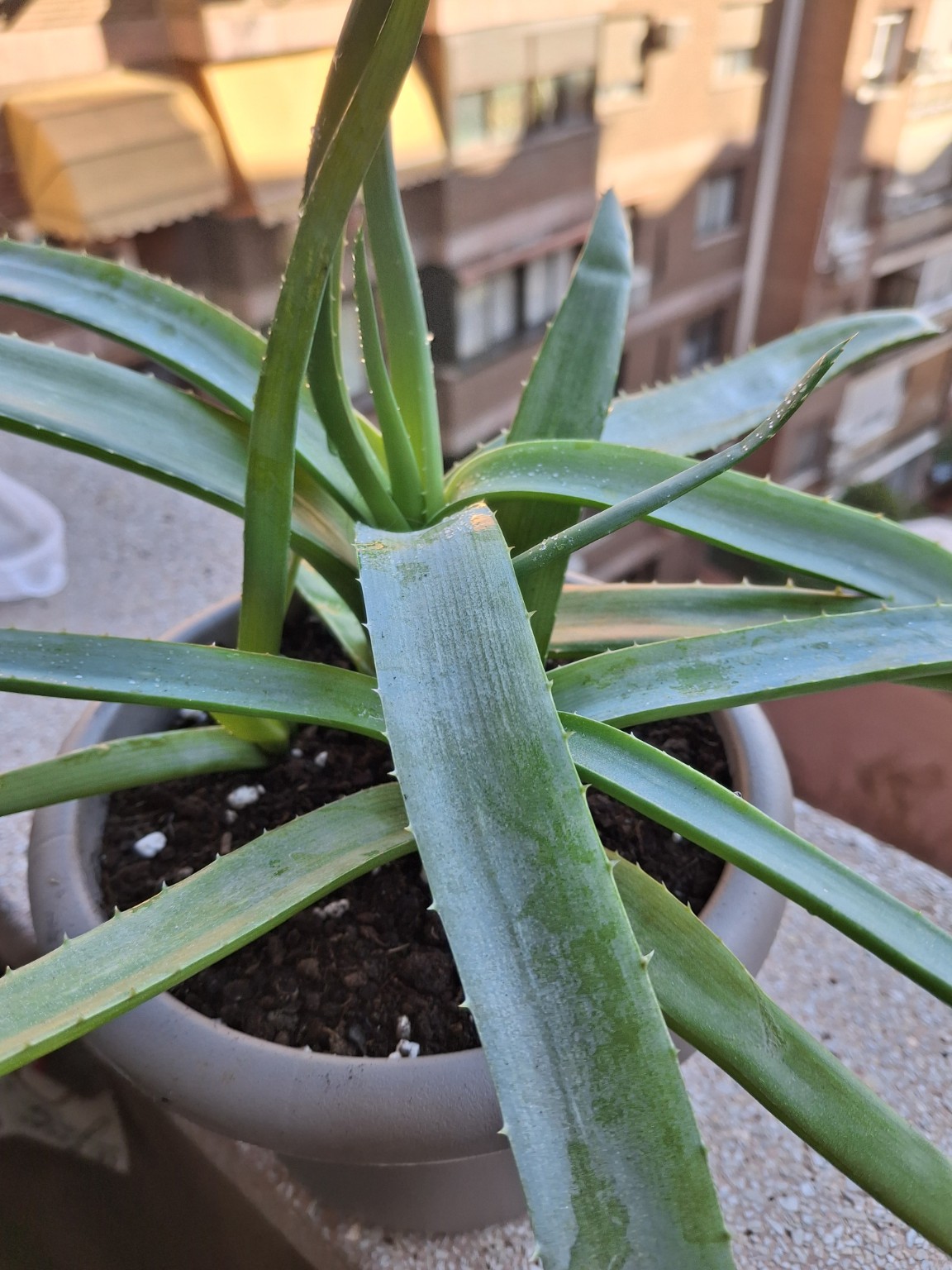
Propagate aloe from pups
The small rosettes beside the parent are offsets, often called pups. For a straightforward first attempt, choose one with its own roots. Do not treat a detached aloe leaf like an Echeveria leaf cutting.
- Ease the plant from its pot and uncover the connection to a rooted pup without tearing the roots.
- Separate it gently, using a clean, sharp tool if the connection will not come apart. Keep its roots and growing center intact.
- If separation exposes a fresh fleshy cut, let that surface dry and seal before potting. Use a small pot and free-draining succulent mix, with the rosette above the soil.
- Keep the young plant in bright, sheltered light. Avoid soaking fresh wounds or leaving the mix wet; as it establishes, use the same moisture checks as for the parent.
A tiny pup without roots can stay attached and develop further. There is no benefit in detaching every new offset as soon as it appears.
Will an indoor aloe flower?
Mature aloe plants can produce a tall stalk carrying tubular flowers. Age and growing conditions matter, and an indoor plant may remain healthy without flowering. Give it strong light and room for functioning roots; do not deliberately crowd or stress it to force a bloom.
Gel, handling and pets
The clear inner gel and the latex beneath the leaf skin are different materials. Research on prepared aloe products does not make a freshly cut houseplant a ready-made treatment. Aloe latex can be harmful if swallowed, and topical aloe can irritate some people's skin. This guide covers cultivation, not home remedies; see the NCCIH publication on aloe vera listed under Reference material for the safety information used here.
Wear gloves when cutting or handling damaged leaves. The ASPCA lists Aloe vera as toxic to cats and dogs. Keep plants and cuttings out of reach, and contact a veterinarian promptly after suspected ingestion.
Reference material
Reference material consulted for this independently written guide. The publishers listed have not reviewed or endorsed it.
Photographs on this page were taken by the site owner. They document individual plants, not confirmed diagnoses.
- NC State Extension — Aloe vera: cultivation, offsets and flowering
- RHS — Aloe vera: growing conditions and handling
- RHS — cacti and succulents: potting and propagation
- University of Maryland Extension — checking moisture and watering
- University of Maryland Extension — symptoms and possible causes
- University of Illinois Extension — offsets and plantlets
- University of Illinois Extension — choosing a propagation method
- NCCIH, National Institutes of Health — aloe gel, latex and safety
- ASPCA — Aloe vera toxicity